
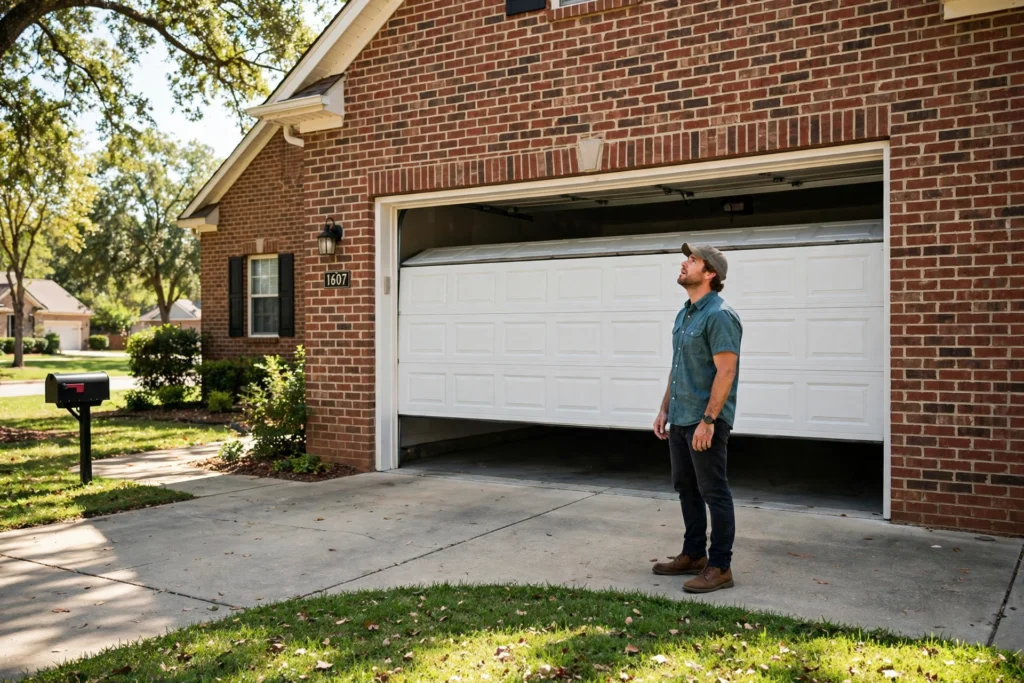
You Press the Button, the Door Comes Down, and Then It Changes Its Mind
You are backing out of the driveway, you press the remote, and the garage door rolls down like it should. Then, just as it reaches the bottom, or sometimes halfway there, it stops, the opener light blinks, and the door rolls all the way back up. You try again. Same result. Your garage is standing wide open.
At Garage Door Pros, this is one of the most common calls we get from Richardson homeowners, and the good news is that a reversing door is usually not a broken door. It is a safety system doing its job based on bad information. The whole fix comes down to figuring out which safety system is talking, and whether it is telling the truth.
This guide walks through the causes in the order you should check them, the checks you can safely do yourself, and where the problem stops being a setting and becomes a repair. If your door will not run at all, or will not open, that is a different problem, covered in our companion guide to a garage door opener not working.
Why Your Door Reverses: It Thinks Something Is in the Way
Every modern opener protects your family, your pets, and your car with two separate systems, and either one can send the door back up.
The first system is the pair of photo-eye sensors at the bottom of the door opening. One eye sends an invisible beam across the doorway and the other receives it. If that beam is broken or blocked, the opener assumes a child, a dog, or a bike is in the path, and it will not let the door close. If the door is already moving down when the beam breaks, it reverses on the spot.
The second system lives inside the opener itself. It watches how hard the door is working as it travels. A healthy door moves with steady, predictable resistance. If the opener feels more pushback than it expects, it decides the door has hit something and reverses. That resistance does not have to be a real obstacle: a dry roller, a bent track, or a tiring spring creates the same signal.
So every reversing door comes down to one of two messages: “I cannot see the doorway clearly,” or “this door is pushing back too hard.” If you would rather skip straight to the answer, this is exactly what our sensor and safety reversal troubleshooting service is built to diagnose.
Check the Safety Sensors First (The Most Common Cause)
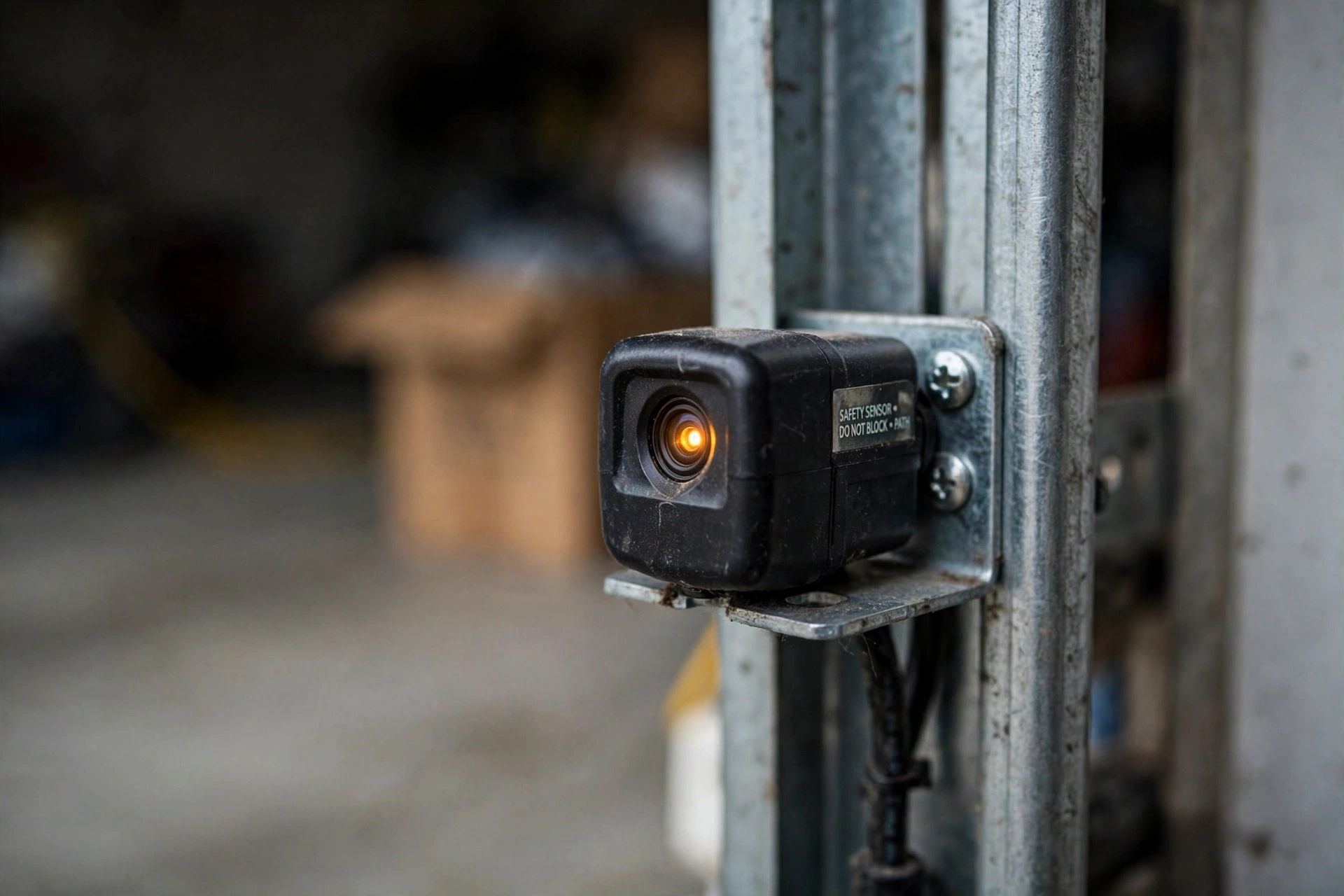
Start here, because sensor problems cause more reversing doors than everything else combined. The two sensors sit on the door tracks near the floor, a few inches above the concrete, and each has a small light on it. When the system is healthy, both lights glow steady. A dark or flickering light is your problem announcing itself.
Work through these checks in order:
- Clear the doorway completely. Move the trash can, the bike, the broom, the stack of boxes. Then look closely at the sensor lenses. A cobweb across a lens breaks the beam as surely as a bicycle does.
- Clean both lenses. Wipe each lens gently with a soft, dry cloth. Texas dust and pollen coat these lenses quickly.
- Check the lights and align the eyes. If one light is out or flickering, loosen the wing nut or bracket screw on that sensor and nudge it slowly until both lights burn steady. The eyes have to point at each other almost exactly. Tighten the bracket once they agree, because a loose one drifts again.
- Inspect the wires. Follow the thin sensor wires from each eye up to the opener, looking for a staple pinched through a wire, a frayed or chewed section, or a loose connection. A damaged wire makes a sensor fail off and on, which is why some doors reverse only sometimes.
- Test from the wall button and the remote. Watch the door the whole way down. If it closes from the wall button but not the remote, stay with the sensors a little longer, because that pattern means the beam is marginal and breaks with vibration.
If both lights are steady, the lenses clean, and the door still reverses, the cause sits further down this list. If a sensor is cracked, a light will not come back no matter how you aim it, or the wiring is damaged, that is a parts job, not an adjustment job.
Sunlight, Dirt, and Cobwebs: The Texas Sensor Problems Nobody Mentions
One Richardson pattern confuses everyone until they have seen it: the door works perfectly all morning, then refuses to close in the late afternoon. The cause is the sun. On west-facing and southwest-facing garages, in neighborhoods like Berkner Park, low sunlight shines directly into the receiving sensor eye. The eye cannot tell its own beam from a flood of sunlight, so it reports a broken beam and sends the door back up.
You can confirm it in ten seconds. Shade the receiving eye with your body or a piece of cardboard, then try to close the door. If it suddenly closes normally, sunlight is your culprit. The lasting fixes are simple: keep both lenses clean, since a dirty lens makes glare worse, and have the two eyes swapped side for side so the receiving eye sits on the shaded side of the opening. A technician can also fit a small shield over the eye. Never tape over or unplug the eye, for reasons the FAQ below covers.
The bottom of the track collects the rest of our local troublemakers too. Storm winds blow leaves, grit, and dried mud in where the sensors live. Homes near the greenbelts in Duck Creek collect extra leaves and the occasional wasp nest in the track corners. Spiders treat the sheltered sensor brackets as prime real estate, and one well-placed web is enough. When you clean the lenses, sweep out the bottom of both tracks too. You will be surprised how often that alone ends the reversing.
Travel and Force Settings: When the Door Thinks the Floor Is an Obstacle
If the sensors check out, look at how the door behaves in its last few inches. A door that travels all the way down, touches the floor, and immediately reverses is telling you the opener thinks the floor is an obstacle it ran into.
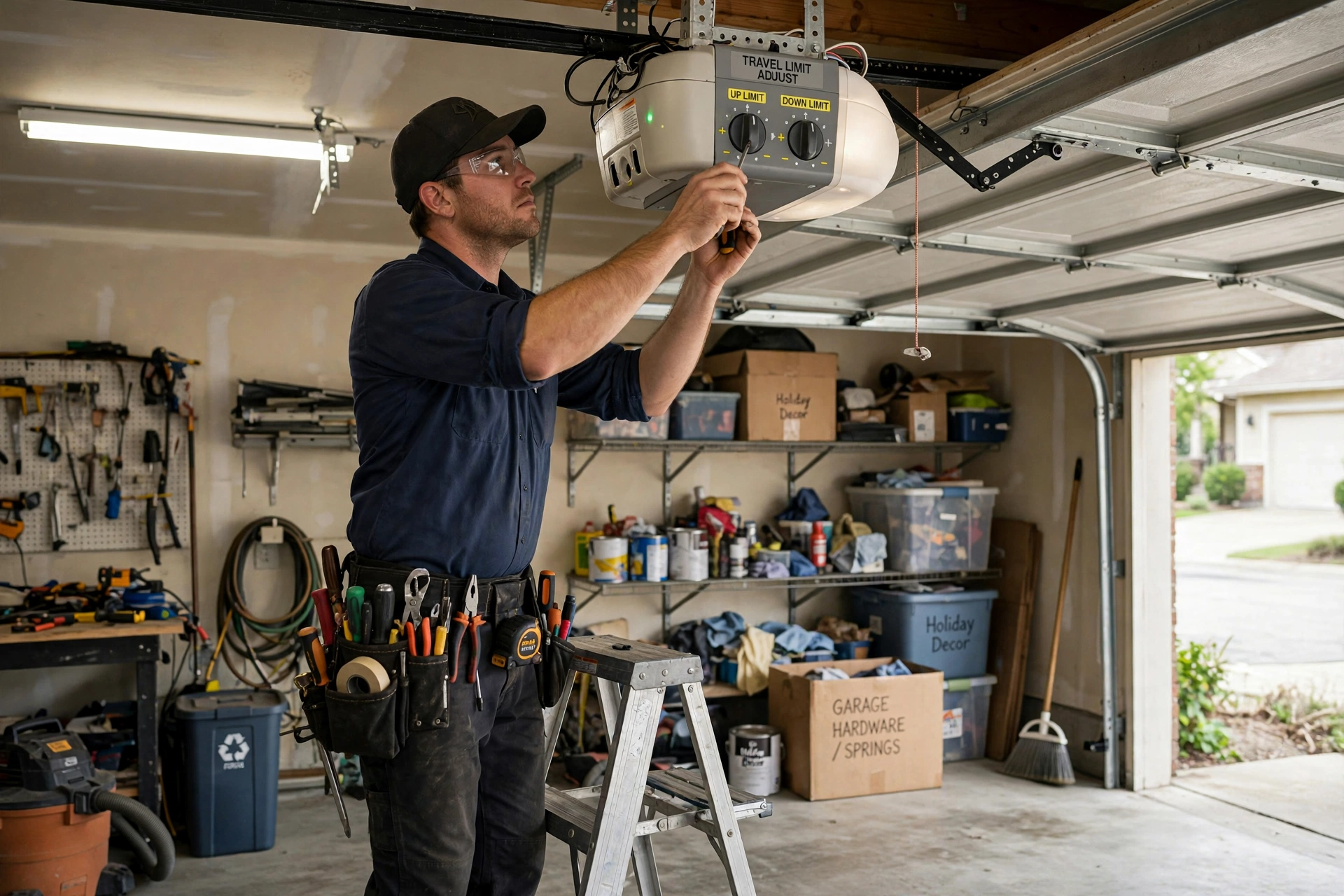
That is a travel limit problem. The travel settings tell the opener where “fully closed” is. If the down limit is set a little too far, the door keeps pushing after it has sealed against the floor, and the opener reads the sudden resistance as a collision. Settings drift over the years as chains stretch and gears wear, so a door that behaved for a decade can start doing this out of nowhere.
The force setting is the travel limit’s partner. It controls how much resistance the opener tolerates before reversing. Set too low, or drifted low, ordinary friction partway down the track trips it, and the door reverses halfway instead of at the floor. That mid-travel reversal is the fingerprint of a force or friction problem, not a sensor problem.
Homeowners are allowed to make these adjustments, with two cautions. First, note or photograph the current dial positions before you touch anything, so you can always put them back. Second, work in tiny steps and test after every step. A quarter turn is a lot in opener terms. And never solve a reversing door by cranking the force up. Force set high enough to power through real resistance will also power through a real obstacle, which defeats the safety system and can bend panels or burn out the opener. If the door only closes with the force cranked up, the real problem is friction or balance.
Tracks, Rollers, and Friction That Fool the Opener
Sometimes the opener is telling the truth. The door really is pushing back too hard. The usual suspects are a track that took a bump from a car bumper or a ladder, grit and small stones packed into the track channel, worn or dry rollers, and a door rubbing its frame on one side.
One test separates door problems from opener problems, and it takes a minute. Close the door fully, then pull the red release cord to disconnect the opener. The door must be all the way down when you do this. Now lift it by hand. A healthy, balanced door feels manageable, and stopped about halfway up, it should stay roughly where you left it. Work it through the spot where it used to reverse. If it binds, scrapes, or gets heavy at the same point every time, you have found your friction, usually right there in the track or a roller. Our off-track door alignment page covers what track damage looks like and how it is corrected.
If the door is very heavy, sinks when you let go, or will not stay halfway, stop. That is a spring and balance problem, not an opener problem. The springs do most of the lifting on every garage door, and as a spring weakens, the opener strains harder and its force sensor trips earlier and earlier. It is also where this stops being a homeowner job. Springs store serious tension even when they look harmless, and adjusting them without the right tools and training is how people get hurt. Reconnect the opener by running it until the cord clicks back in, and call a technician.
What the Blinking Opener Light Is Telling You
The blinking light is not random. When an opener refuses to close a door, it uses that light, and on many models a small diagnostic LED, to report what it thinks is wrong. In general terms, a light that blinks as the door reverses points back at the safety sensor circuit: a blocked beam, a misaligned eye, or a wiring fault. Other blink counts exist and point at other systems, such as travel settings, the motor, or the logic board, but each count means something different for every brand and often every model. There is no universal table of blink codes; anyone who offers one is guessing.
What is worth doing is simple. Count the blinks. Check whether both sensor lights are lit and steady. Note whether the problem happens at the floor, halfway down, or only at certain times of day. A technician will ask you exactly those things on the phone. If the blinking points at the opener’s electronics rather than the sensors or the door, it is a repair job, not a settings job.
When Reversing Means Call a Technician
Call instead of adjusting if you see any of these:
- A broken spring. Look at the spring mounted on the wall above the door. A visible gap in the coil means it has snapped. Do not run the opener on a broken spring.
- A loose, frayed, or dangling cable beside the door, or a door sitting crooked in its opening.
- A dead or damaged sensor, a light that will not come back after cleaning and alignment, or wiring that is torn or chewed.
- A failed manual test. The door is heavy, drops, or will not hold its position when lifted by hand.
- Reversing that started right after an impact, a storm, or any work done on the door or opener.
- A door that will not stay closed at all tonight. A garage door that stands open is an open door into your house. If yours will not secure the home, treat it as urgent. That is what our emergency garage door repair service exists for. Until help arrives, disconnect the opener with the door fully down, lower it by hand if it moves safely, and engage the manual lock or slide bolt if your door has one.
On every item on that list, the reversing is a symptom, and adjusting settings would only hide it while the part gets worse.
Frequently Asked Questions
Why does my garage door reverse as soon as it touches the floor?
That pattern almost always means the down travel limit is set slightly too far. The door seals against the floor, the opener keeps pushing because it thinks it has not arrived yet, resistance spikes, and the opener reads the floor as an obstacle. A small adjustment usually fixes it. If the door also feels heavy when lifted by hand, have the spring balance checked too, because a weakening spring does the same thing.
Why do my sensors work in the morning but fail in the afternoon?
Sun glare. On west-facing and southwest-facing garages, low afternoon sun shines straight into the receiving sensor eye and overwhelms the beam, so the opener believes the doorway is blocked. Shade the receiving eye with your hand and try again. If it works, that confirms it. Cleaning the lenses helps, and the lasting fix is swapping the eyes side for side or fitting a small shade over the receiving eye.
What do the blinking lights on my opener mean?
In general terms, blinking while the door refuses to close most often reports a safety sensor problem: a blocked beam, a misaligned eye, or a wiring fault. Beyond that, blink counts are diagnostic codes, and they differ from one brand and model to the next. Count the blinks, check both sensor lights, and check the label on the opener unit or the manual for your model. Those details tell a technician most of what he needs.
Can I just disconnect the sensors so the door closes?
No, and please do not. The photo eyes are not an accessory; they are a required safety system on openers sold since the early 1990s, there to stop the door if a child or a pet is in its path. A door running with disconnected sensors can keep pushing down on whatever is under it. If a sensor has failed, the safe fix is cleaning, alignment, or replacement, and sensors are among the least expensive parts on the door.
How much does it cost to replace garage door sensors in Richardson?
Sensor replacement sits at the inexpensive end of garage door repairs, especially compared with springs or an opener. The exact cost depends on whether your sensors need cleaning and alignment or full replacement, whether the wiring is damaged too, and whether your opener takes brand-specific eyes or standard ones. The only honest way to price it is a quick look at the door, which is why we give a free quote before any work starts.
A Door That Will Not Stay Shut Is Not a Small Problem
A reversing door is annoying in the morning and a genuine security problem by nightfall, and most of the time the cause is small: a dirty lens, a bumped sensor, a drifted setting, or a track full of storm grit. Work through the checks above and you will fix a good share of them yourself. When the cause is a spring, a sensor, or the opener’s electronics, we are close by. Call (855) 496-0527 or get a free quote and tell us when the door reverses and what the lights do, and we will know where to start. Garage Door Pros is based at 1407 E Campbell Rd #1000, Richardson, TX 75082, and we troubleshoot reversing doors across the city.