

The Question Every Richardson Homeowner Eventually Asks
Every garage door in Richardson is quietly counting down. It might be the door that came with the house in Canyon Creek twenty years ago, or a newer door that already sounds tired. Sooner or later, usually right after something breaks, the same question comes up: how long do garage doors actually last, and is this door worth one more repair, or is it time to replace it?
At Garage Door Pros, we give homeowners the same honest answer we would want ourselves. A garage door is not one thing with one lifespan. It is a system of parts, and each part ages on its own schedule. The panels might have a decade of life left while the springs are already past theirs. This guide breaks down how long each part lasts in North Texas, the signs a door is at the end of its life, the signs it just needs one good repair, and the simple math that helps you decide.
How Long Each Part Lasts: The System View
Thinking in parts instead of one big number makes every repair decision easier. Here is the general picture, keeping in mind that use, care, and Texas weather move these numbers up or down.
- The door itself: A well made steel door often lasts 20 to 30 years with basic care. Aluminum and fiberglass doors usually land in a similar or slightly shorter range. Wood doors can last for decades too, but only with regular sealing and painting, and they ask more of the homeowner along the way.
- Springs: Springs are not measured in years. They are rated in cycles, and one cycle is one full opening and closing. Standard builder grade springs are commonly rated around 10,000 cycles, while higher cycle springs can be rated at 25,000 cycles and beyond. A household that opens the door four times a day can use up a standard spring in roughly seven years.
- The opener: Most openers give 10 to 15 years of service. The motor often outlasts the gears, the circuit board, and the remote technology around it.
- Rollers and hinges: Steel rollers may need attention within 7 to 10 years, while quality nylon rollers often run longer and far more quietly. Hinges wear slowly but crack and loosen with age.
- Cables and drums: Lift cables commonly last as long as the springs they work with, and they should always be inspected whenever springs are replaced.
- Seals and weatherstripping: Bottom seals in Texas heat often harden and crack within 3 to 6 years. This is the shortest lived part on the whole system, and thankfully one of the cheapest to renew.
The pattern matters more than any single number. On a 15 year old door, a broken spring is not a death sentence. It is a wear part arriving on schedule. The question is what shape the rest of the system is in when it fails.
Why Springs Are Counted in Cycles, Not Years
Homeowners are often confused when a spring breaks on a door that is “only” eight years old, while a neighbor’s spring lasted fifteen. The difference is usually arithmetic, not quality. A door used twice a day lives a completely different life from one used eight times a day as the main entrance, which is how many Richardson families use their garage.
Cycles also explain why both springs should usually be replaced together. Springs installed at the same time have lived the same number of cycles, so when one snaps, the other is normally near the end of its own rating. Replacing the pair resets the clock once instead of paying for a second service visit a few months later. Our torsion spring repair and replacement page explains how spring sizing and cycle ratings work in more detail, including the high cycle options worth choosing if your garage is your front door.
How Texas Heat and Hail Shorten the Clock
Lifespan charts are usually written for an average climate, and North Texas is not average. Two local forces age garage doors faster here than the brochures assume.
The first is heat. Summer after summer of triple digit afternoons bakes the finish on sun facing doors, dries out lubricant, hardens rubber seals, and expands and contracts metal parts thousands of times. Lubricant that would last a year in a mild climate can cook off a Richardson door by late summer, leaving rollers and hinges running dry and loud. Opener circuit boards and safety sensors suffer too, since they live in one of the hottest rooms of the house.
The second is hail. The Dallas and Fort Worth area sits in one of the most active hail corridors in the country, and Richardson takes its share of spring storms. Hail rarely kills a door in one event. Instead it adds dents year after year, chipping finish, opening the door to rust, and slowly turning a sound door into a tired looking one. A door that might have lasted 25 years in a gentle climate can look and feel worn out at 15 here, even if it still runs.
In Texas, maintenance buys more years than it does in most places, because so much of the aging here is surface and friction damage that care can slow down. An annual preventative maintenance tune-up is the cheapest lifespan insurance a door can get.
Signs Your Door Is Truly at the End of Its Life
Some doors should be replaced, and pushing them further only spends repair money on a system that will keep failing. These are the signs we take most seriously.
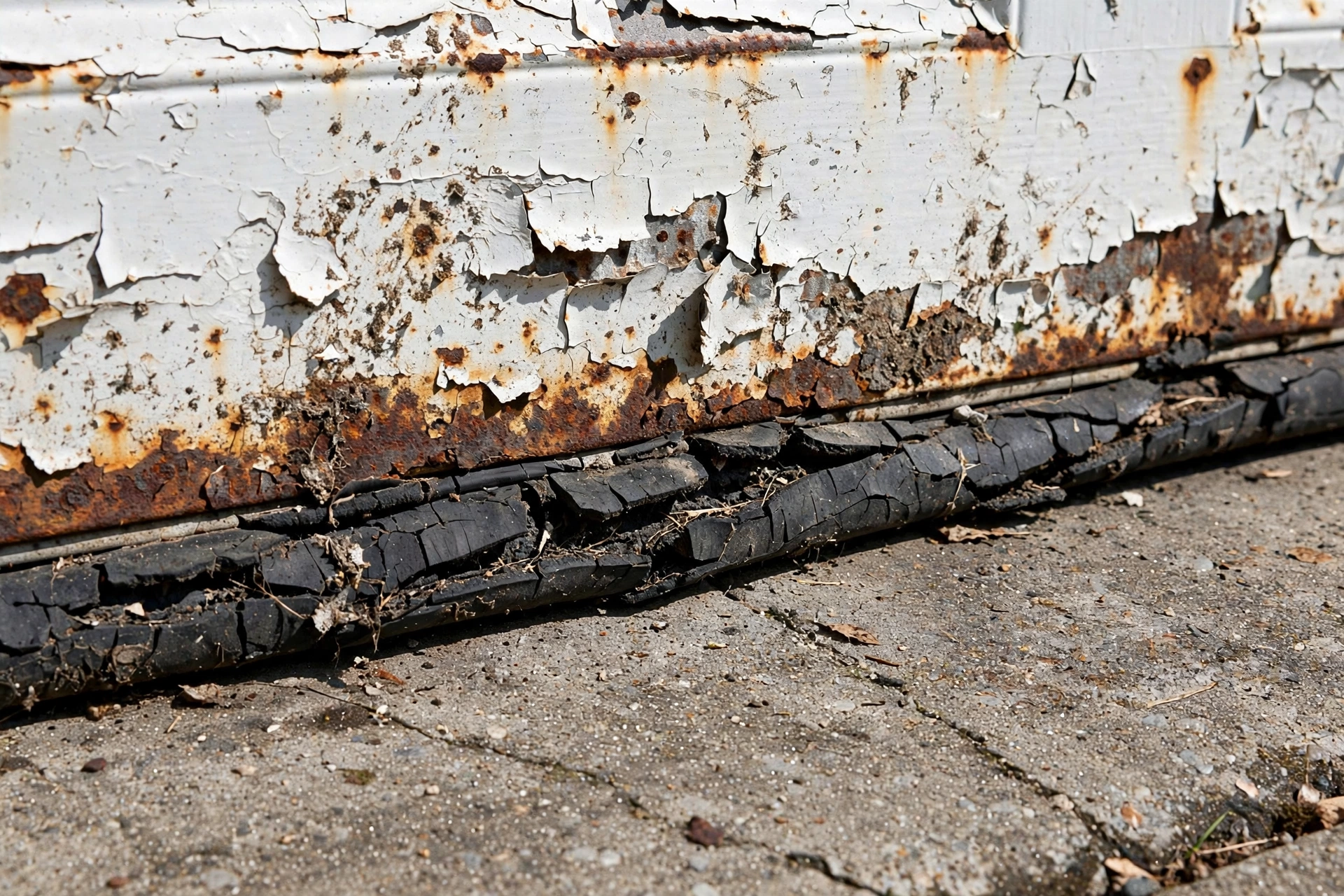
- Rust that is eating through, not sitting on the surface. Surface rust can be treated. Rust bubbling through the bottom section, flaking metal, and soft spots mean the structure itself is going. The bottom section always goes first because it lives closest to sprinkler water and driveway runoff.
- Cracked, split, or sagging sections. A door that sags in the middle when open, or sections that are cracked at the hinge lines, is losing the stiffness it needs to travel safely in the tracks.
- Repairs are stacking up. One repair a year is normal for an older door. Three different failures in a year is the system telling you its parts are all reaching the end together.
- The parts no longer exist. When a door model is discontinued, replacement sections, windows, and hardware get scarce. This is the same matching trap we walk through in our guide to a dented garage door panel, where one damaged section can force a whole door decision.
- Safety is falling behind. Older doors may lack modern pinch resistant sections, and old openers may lack the photo eye sensors and auto reverse systems that are standard today. A door can run and still not be a door you want around kids and pets.
- It sounds and feels tired everywhere. Grinding, shaking, and jerking from several directions at once usually means wear in many places, not one fixable part. Fresh rollers and hinges can transform a sound door, but not one whose sections and tracks are worn too.
If two or three of these describe your door, a replacement conversation is honest, not a sales pitch.
Signs One Good Repair Buys You Years More
The opposite case is just as common, and it is where homeowners most often get talked into doors they do not need yet. These signs point to repair, not replace.
- One clear failure on an otherwise healthy door. A snapped spring, a frayed cable, or a dead opener on a door whose sections are straight, clean, and rust free is a part problem, not a door problem. Fix the part and the system has years left.
- The door is under 15 years old and the damage is local. A single dented section on a current model can often be swapped. Our panel and section replacement work exists for exactly this case, and the dented panel guide linked above walks the decision in full.
- The noise is new but the door is sound. Noise that arrived over a few months usually means dry or worn rollers, loose hardware, or a door drifting out of balance. These are tune-up and small parts territory.
- The opener died but the door is balanced and healthy. A door that lifts easily by hand with the opener disconnected does not care how old its opener is. A modern opener on a sound door is a perfectly sensible pairing.
- The problems are all on the cheap list. Seals, weatherstripping, remote batteries, sensor alignment, and lubrication are maintenance items. Never replace a door over parts that cost this little to renew.
A useful test: lift the door halfway by hand with the opener disconnected. A healthy door stays roughly where you leave it and moves smoothly. If yours does that and the sections look solid, you are almost always looking at a repair, whatever its age.
The Repair vs. Replace Math, in Honest Factors
When the case is genuinely in the middle, run the decision through these factors rather than gut feeling.
- Compare the repair to the replacement, not to zero. In the dented panel guide we use a 50 percent rule of thumb: when a repair climbs past roughly half the cost of a new door, replacement usually wins. The same thinking applies here. A small repair on a mid life door is easy math. A major repair on a 20 year old door deserves a harder look.
- Count the repairs behind you and ahead of you. What has the door cost in the last two years, and what is visibly wearing now? A door with new springs but an aging opener, worn rollers, and rust starting at the bottom has more bills coming. Price the pattern, not just the part.
- Consider the age of the house plan. Selling within a year or two changes the answer, because a new door is one of the most visible updates a buyer sees from the street, while a long term home rewards the door that will run quietly for the next two decades.
Repairs are priced by the part and the labor: springs, cables, rollers, sections, opener components. Replacement is driven by door size, material, insulation level, style, windows, hardware, and removal of the old door. A free on site quote turns this section from theory into two actual figures you can weigh.
What Replacement Gets You That No Repair Can
When replacement is the right call, know what you are buying beyond a door that works.
- Insulation and a cooler garage. No repair can add a foam core to a thin door. A modern insulated door can change a Richardson garage from an oven into a usable room, and our guide to whether an insulated garage door is worth it covers the temperature, noise, and energy questions in full.
- Quiet you can hear. New sections, nylon rollers, fresh springs, and a modern belt drive opener together produce a door that opens with a hum instead of a rattle. On an old system, no single repair delivers that.
- Current safety equipment. Photo eyes, auto reverse, pinch resistant sections, and battery backup during power outages are standard on new systems and missing on many older ones.
- Curb appeal in one move. The garage door is often the largest single surface on the front of a Richardson home. A clean new door changes how the whole house looks from the street, which matters for pride of ownership and for resale alike.
- A reset clock. New door, new springs sized for its weight, new seals, and hardware that all starts at zero cycles together. Our new garage door installation service handles the measuring, the removal, and the setup as one job.
How to Decide, Step by Step
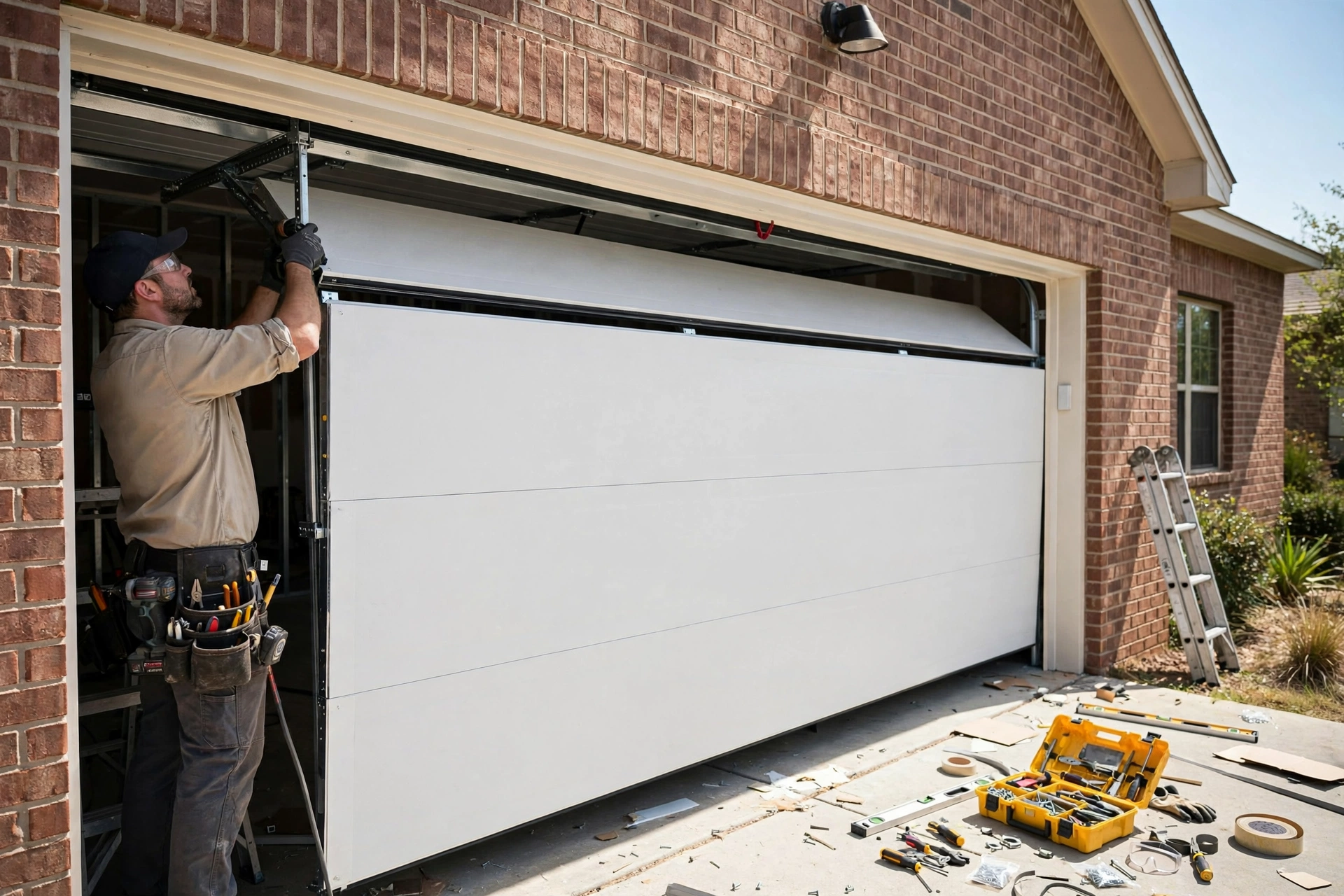
If you are standing in the driveway unsure, work through this order. First, identify the actual failure, not the age. Second, judge the sections: straight, solid, and rust free means the door body has life. Third, list what else is visibly aging, because the next likely repairs belong in the math. Fourth, apply the 50 percent thinking from the panel guide when a repair quote lands. Fifth, weigh the extras only a new door brings against how long you plan to stay in the home.
If the answer is still not clear, that is what a free quote visit is for. A good technician should show you the rust, the wear, and the balance test in person, and tell you straight whether they would repair or replace their own door.
Frequently Asked Questions
How long do garage doors last in Texas?
A steel door with basic care often lasts 20 to 30 years, though Texas heat and hail can shave years off the finish and hardware even when the door keeps running. Springs, openers, rollers, and seals all wear out sooner and are replaced along the way. The door is the longest lived part of a system whose smaller parts renew in cycles.
How many years should garage door springs last?
Springs are rated in cycles rather than years, and one cycle is one opening plus one closing. Standard springs rated near 10,000 cycles may last about five to seven years in a busy household and well over a decade in a quiet one. Higher rated springs, often 25,000 cycles and up, cost a little more at replacement and can double or triple the time between spring changes.
Is it worth repairing a 20 year old garage door?
Sometimes, yes. If the sections are straight, solid, and free of deep rust, and the failure is a single wear part like a spring or cable, a repair can honestly buy several more years. If the same door also needs sections, an opener, and rust work, the combined cost usually makes replacement the smarter spend. The deciding factor is the condition of the door body, not the birthday alone.
What usually fails first on a garage door?
The small parts go first. Bottom seals harden and crack within a few years in Texas heat. Springs reach their cycle limit next, commonly somewhere in the five to ten year window depending on use. Rollers, cables, and opener gears follow, while the door sections themselves are usually the last part of the system to give up.
How can I make my garage door last longer?
Keep it clean, keep it lubricated with a garage door rated lubricant, and keep the balance checked. Wash road grime and sprinkler water off the bottom section, replace cracked seals before water gets in, and schedule a yearly tune-up so worn rollers, fraying cables, and tired springs are caught while they are still small, inexpensive repairs.
Not Sure Whether to Repair or Replace? Get a Straight Answer
If your Richardson door is broken, loud, rusting, or just old enough to make you wonder, we will inspect it, show you exactly what we find, and tell you plainly whether a repair buys you years or whether replacement is the honest call, with no pressure either way. Call today, or get a free quote and tell us how old your door is and what it is doing. Garage Door Pros is based at 1407 E Campbell Rd #1000, Richardson, TX 75082, and we repair and replace garage doors across the city.