
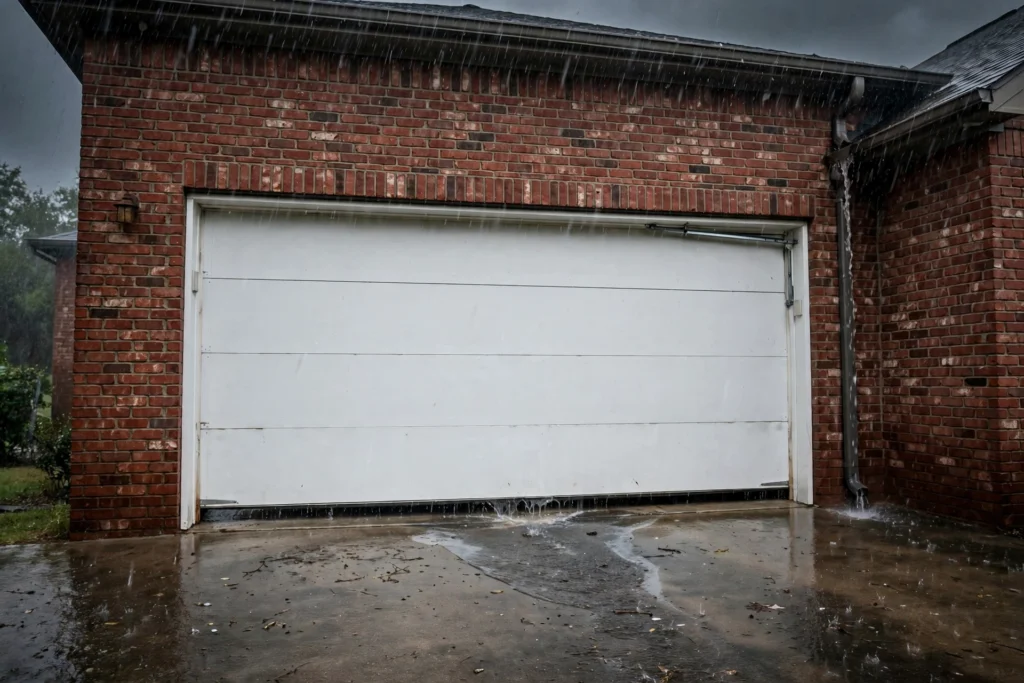
The Morning After a North Texas Downpour
North Texas storms rarely arrive politely. A line of thunderstorms rolls through Richardson after dark, rain comes down sideways for an hour, and by morning the sky is clear. Then you walk into the garage and find a puddle across the floor, a dark water line under the door, and two storage boxes soaked through at the bottom. The door was closed all night, and the roof is fine. The water came in under and around a door that no longer seals the opening it covers.
At Garage Door Pros, water under the door is one of the most common calls we get after a storm, and most of these leaks have simple causes and honest fixes. The trick is finding where the water gets in before you spend money, because the bottom of the door is only one of three ways a garage takes on water. This guide walks through finding the real entry point, testing your seals in two minutes, the fix ladder from bottom seal to threshold seal, and the cases where water points at a bigger problem than the door.
Find the Real Entry Point First (It Is Not Always the Bottom)
Water reaches your garage floor three ways. It can push under the bottom of the door, the most common route. It can blow in around the sides and across the top during wind-driven rain. Or it can run across the driveway and in under the door, because the driveway slopes toward the garage or the slab edge has settled over the years.
Each route has a different fix, so start by reading the evidence. Where does the puddle sit? A puddle tight against the bottom of the door points under it. Wet streaks down one side point to the side seals. A water trail running deep into the garage, wettest at the lowest corner, often means water arrives with slope behind it, not just through a gap. Dirt lines on the concrete show where water has flowed before, so you know this is a pattern, not one freak storm.
This matters a lot in older Richardson neighborhoods like College Park and Yale Park, where mature trees and soil movement mean the concrete around the garage has often shifted since the house was built. Your door may seal as well as it did ten years ago, while the ground it seals against has quietly changed.
The Bottom Seal: The Part That Fails First in Texas Heat
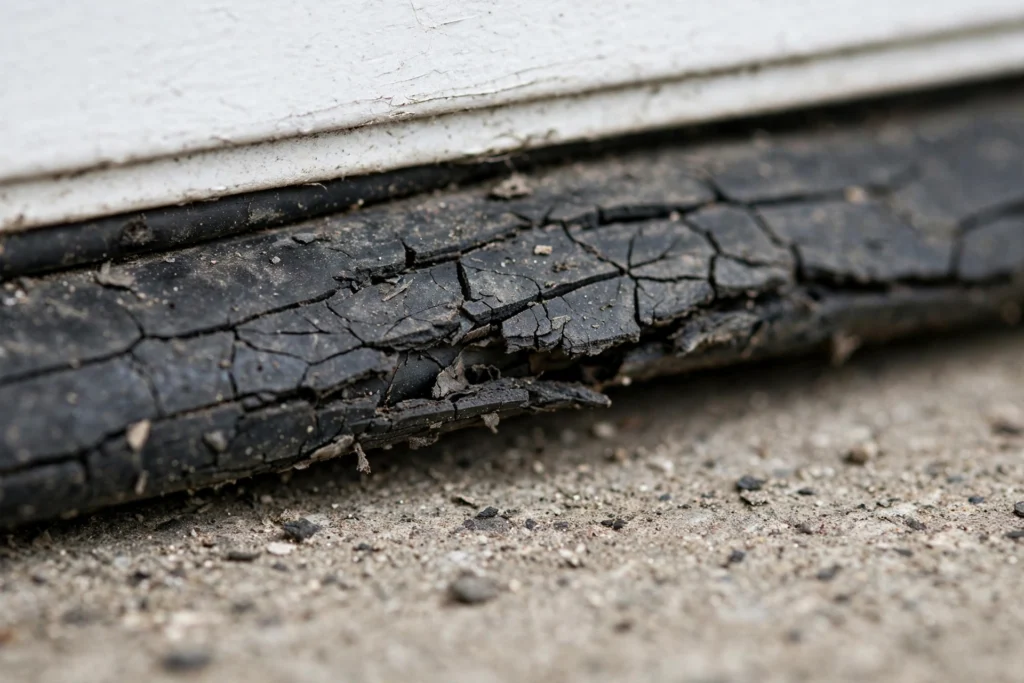
The bottom seal is the strip of rubber or vinyl attached to the bottom edge of the door. When the door closes, it compresses against the concrete and plugs the gap between door and floor. It is a simple part doing a hard job, and in Texas it ages fast. Heat bakes it, sun hardens it, and after a few years the rubber cracks, flattens, and stops springing back. The ends go first, shrinking and leaving open corners where water, dust, and insects walk straight in.
Checking yours takes a minute. Look along the bottom edge for cracks, missing chunks, or rubber gone flat and stiff. Then try the dollar bill test: close the door on a dollar bill at a few spots along the bottom, and pull. If it slides out with almost no resistance, the seal is not gripping the floor there, and water will get through the same gap. Test both corners carefully, because corner gaps are the most common leak points we see.
Replacing a worn bottom seal is a standard fix inside a preventative maintenance tune-up, because the same visit covers the seal, the balance, and the hardware that decides how evenly the door sits. A fresh seal on a crooked door will still leak, which is why the check and the fix belong together.
Threshold Seals: The Fix for Driveways That Slope Toward the Garage
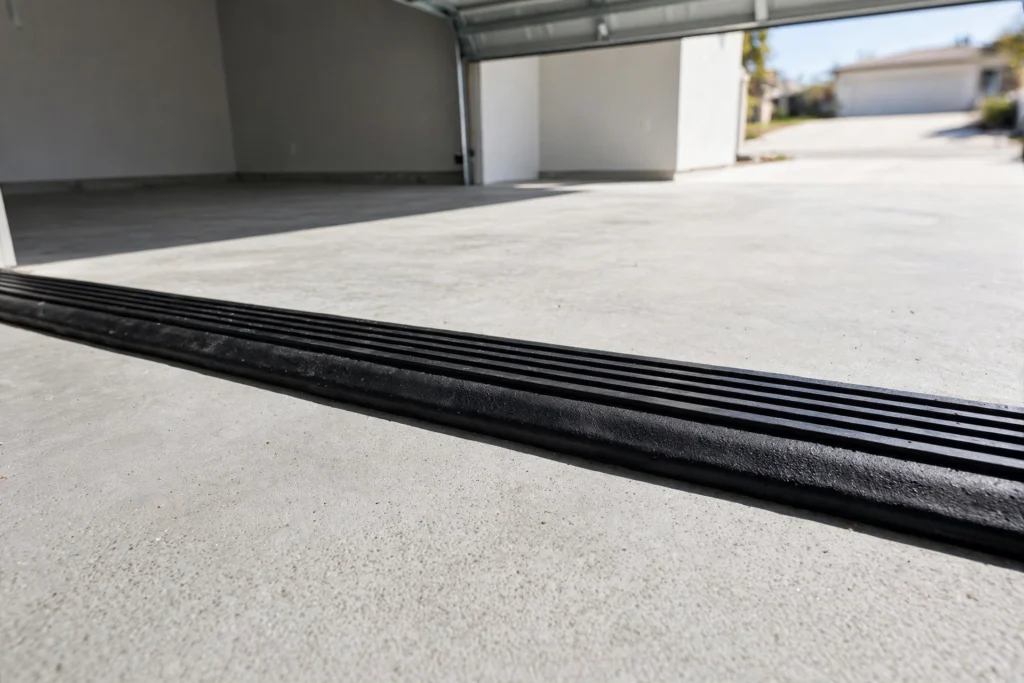
If a new bottom seal is not enough, the next step up is a threshold seal. A threshold seal is a strip of heavy rubber bonded to the garage floor right where the door lands, creating a low raised ridge across the opening. Water sheeting across the driveway now has to climb that ridge to get inside, and most storm runoff cannot. When the door closes, its bottom seal presses down just behind the ridge, so the two seals work as a pair.
Threshold seals earn their keep on driveways that slope toward the garage, a common layout in Richardson. A bottom seal can plug a gap, but it cannot hold back a shallow stream fed by the whole driveway. The threshold changes the geometry instead of fighting the water.
A threshold has limits worth knowing first. The strip must be sized to the opening and bonded to clean, sound concrete, or it peels at the edges. Standing water ponded deep against the door can still find a way over or around it. And on a strongly sloped driveway, the heaviest downpours may still call for drainage work, which we get to below.
Side and Top Seals: The Gaps You Can See Daylight Through
The bottom seal gets all the attention, but the frame around the door has seals of its own. Weatherstripping with a flexible vinyl flap runs up both sides and across the top, pressing against the face of the door. In calm weather the gaps behind it barely matter. In a Texas thunderstorm, rain rarely falls straight down: wind drives it sideways and upward, straight into the side gaps, and it runs down the inside of the door from there.
These seals fail quietly. The vinyl turns brittle in the heat, tears where the door rubs it, or shrinks away from the frame at the corners. Stand inside with the door closed on a bright day and look at the edges. If you can see daylight along a side or across the top, rain can take the same path. This weatherstripping is inexpensive and straightforward to replace, and on many Richardson homes it makes the difference between a dry floor and wet streaks down the walls after big storms.
When the Problem Is the Door Itself (Warped or Rusted Panels)
Sometimes every seal is fresh and the floor still gets wet. Then the problem is the shape of the door itself: a steel door has to hang straight and sit level to seal, and age works against both. The bottom section takes the most punishment: it rusts first, and a rusted bottom edge crumbles until there is nothing left for the seal to hold on to. A warped section bows in the middle, sealing at the ends and gaping at the center. A door out of level sits hard on one corner and floats above the floor on the other.
Look at your door from inside with it closed. A gap wide at one end and tight at the other is a level problem, not a seal problem. Rust along the bottom rail, soft spots in the metal, or a door that rocks when you press a bottom corner all say the section itself is failing. That is when panel and section replacement becomes the real fix, because one sound section restores the straight edge the seals need. If several sections are rusted or warped, or matching sections no longer exist, new garage door installation is the honest last resort.
When the Water Is Telling You Something Bigger
Some garage water is not a door problem at all, and no seal will fix it. The warning signs are where the water sits and where it comes from. Water that pools against the door long after the rain stops means the driveway or apron has settled into a bowl, and every storm delivers its runoff to your doorstep. Water along a side wall, or pushing up through cracks in the slab, arrives from the ground and the grading around the house, not through the door opening. Downspouts dumping roof water beside the garage feed both problems.
Be honest about the pattern. If water only sneaks in at the door line during hard rain, seals and thresholds are the answer. If your driveway funnels water toward the house, or the yard slopes toward the foundation, the lasting fix includes regrading, drainage, or concrete work alongside the door fixes. A good technician will tell you plainly which side of that line your garage sits on, because no seal wins against standing water for long.
The Light Test: How to Check Your Seals in Two Minutes
Here is the check we run first, and you can run it tonight. Wait for dark, close the door, and turn off the garage lights. Have someone stand outside with a flashlight, or set a bright work light facing the door. From inside, look along the bottom edge, up both sides, and across the top. Anywhere light shows through, air and water can get through too.
Then read the pattern, not just the glow. A thin, even line under the whole door means the bottom seal has flattened with age. Light at one corner means the door sits out of level, or the slab has dipped there. Light up one side means that weatherstripping has failed. Light across the top points to the top seal or the top section alignment. With the dollar bill test, this two-minute check tells you which fix to buy and which to skip.
What Ignored Water Does While You Wait
A garage puddle looks harmless because it dries. The damage happens while it sits there, and in the storms that follow. Water under the door wicks into cardboard boxes, so stored photos, books, decorations, and spare flooring quietly ruin from the bottom up. It rusts the bottom panel, track ends, hinges, and spring hardware in the splash zone, and rust on moving parts becomes noise and wear that shorten a door’s life. A damp garage also grows the musty smell that works into everything stored there.
Water is also a welcome sign for pests. Ants, spiders, crickets, and rodents follow moisture, and the same worn seals that let water in give them a doorway. Most homeowners who fix a leak are surprised when the bugs slow down too. A leak you can see is cheap to fix now, and it costs more every season it is left alone.
Homeowner Fixes and Pro Fixes: Where the Line Is
Some of this work is genuinely homeowner friendly. Sweeping the door line clear of leaves and grit costs nothing and matters more than people think. Replacing screw-on side weatherstripping is a basic project. The light test and dollar bill test are free checks anyone can run. A threshold kit is within reach for a careful do-it-yourselfer.
The line sits at the bottom of the door itself. The bottom brackets anchor the lift cables, and those cables are under spring tension. Never remove the bottom brackets or the screws that hold them, on any door, for any reason. Pulling a worn seal from its retainer is fine on many doors, but a rusted retainer, a heavy-duty seal, or a door that needs leveling makes it technician work. Leveling, panel replacement, and seal work on older doors belong in the same category: quick for a pro, risky as a first project.
Keeping Water, Dust, and Pests Out for Good
Once the leaks are fixed, keeping the garage dry is a rhythm, not a project. Walk the door line twice a year, before spring storm season and again in the fall, and run the light test while you are at it. Keep the bottom seal clean, clear the grit and leaf litter where the door lands, and watch the corners, because seals fail there first. Our garage door maintenance tips lay out the rest of the routine that keeps a door sealing well in Texas weather.
Treat seals as wear parts, not lifetime parts. In this climate, a bottom seal four or five years old deserves a close look even before it leaks. Replacing rubber on your schedule, in a calm week, is always cheaper than mopping up after the storm that finds the gap first.
Frequently Asked Questions
Why does water come under my garage door only during heavy rain?
Because light rain never really tests the seals. A drizzle wets the driveway and drains away. A heavy North Texas downpour sheets water across the concrete faster than it can drain, wind pushes it against the door, and a shallow layer builds up at the door line. A slightly worn bottom seal holds back a film of water but fails against a flowing layer, which is why a door can stay dry for months and then leak badly in one big storm.
How often should a garage door bottom seal be replaced in Texas?
Most bottom seals in this climate need replacing every three to five years. Heat and sun dry the rubber out faster here than in cooler states, so a seal that looks whole may be too stiff to grip the floor. Check it twice a year for cracks, flat spots, and shrinking at the ends, and replace it when a dollar bill slides out from under the closed door with little resistance. Waiting for a leak usually means it was due a season or two earlier.
Will a threshold seal stop water on a sloped driveway?
In most cases, yes. A threshold seal gives water a raised ridge to climb where the door meets the floor, and works with the bottom seal to block the shallow stream a sloped driveway sends in. If the slope is steep or water ponds deep against the door, a threshold still helps, but drainage or regrading becomes part of the full fix.
Can I replace the bottom seal myself?
Often, yes. On many doors the seal slides into a retainer along the bottom edge, and swapping it is manageable with basic tools. The one rule with no exceptions: never remove the bottom brackets or their screws, because they anchor the lift cables under spring tension. If the retainer is rusted, the seal will not budge, or the door sits unevenly, have a technician do it and check the level and balance in the same visit.
Is water in the garage a foundation problem or a door problem?
Usually it is a door problem, and the evidence tells you which. Water that enters at the door line during rain, puddles just inside the door, and leaves the rest of the floor dry points to a seal, threshold, or door fit issue. Water that seeps through slab cracks away from the door, comes in along a side wall, or pools against the house because the yard slopes toward it points to grading and drainage. A technician can usually tell within minutes, just from where the water sits and how it got there.
Ready for a Dry Garage Floor?
If the last storm left a puddle inside your garage, we can find the entry point, tell you honestly whether the fix is a seal, a threshold, or something bigger, and handle the door side of it. Call (855) 496-0527 today, or get a free quote and tell us what the water is doing. Garage Door Pros is based at 1407 E Campbell Rd #1000, Richardson, TX 75082, and we seal, repair, and install doors across the city.